I explore the town: introducing its many delights and reflecting on what’s changed.
“…. a fantastic setting, sandwiched between Derwentwater and Borrowdale on one side and the guardians of Skiddaw and Blencathra looking out over it from the other.”
Hunter Davies ; “Lakeland – A Personal Journey”.
I first fell for Keswick as a teenage hiker in the late ‘60’s and love the town so much that, when my wife and I retired, we bought a log cabin there. A lot’s changed since my first visit.
In this guided stroll round the town I describe its many attractions and imagine how someone from the “swinging 60’s” might reflect on what’s changed. On our walk we’ll encounter packs of dogs, shoals of wild swimmers, awesome old churches, “van lifers” and a plethora of pubs. Incidentally, I don’t personally recall much “swinging” in the sixties, but maybe I didn’t get invited to the right parties, preferring the mountaineering club to the night club.
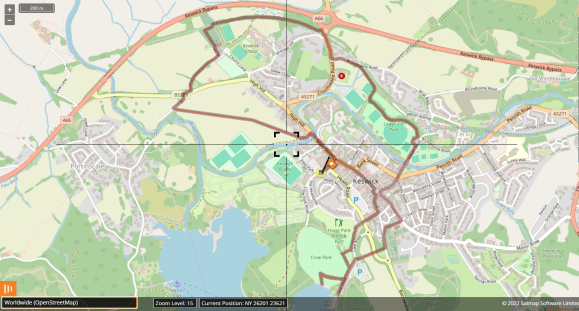
Our walk into the future starts from Keswick bus station (OS grid ref. NY264235), adjacent to Booths supermarket, one of an upmarket chain sometimes described as “the Waitrose of the North”. In the 60’s some of the food and drink now available here would be bewildering: for example, we might have wondered “what on earth’s a Kumquat” or “am I supposed to scoff this “polenta” or plaster the wall with it?”
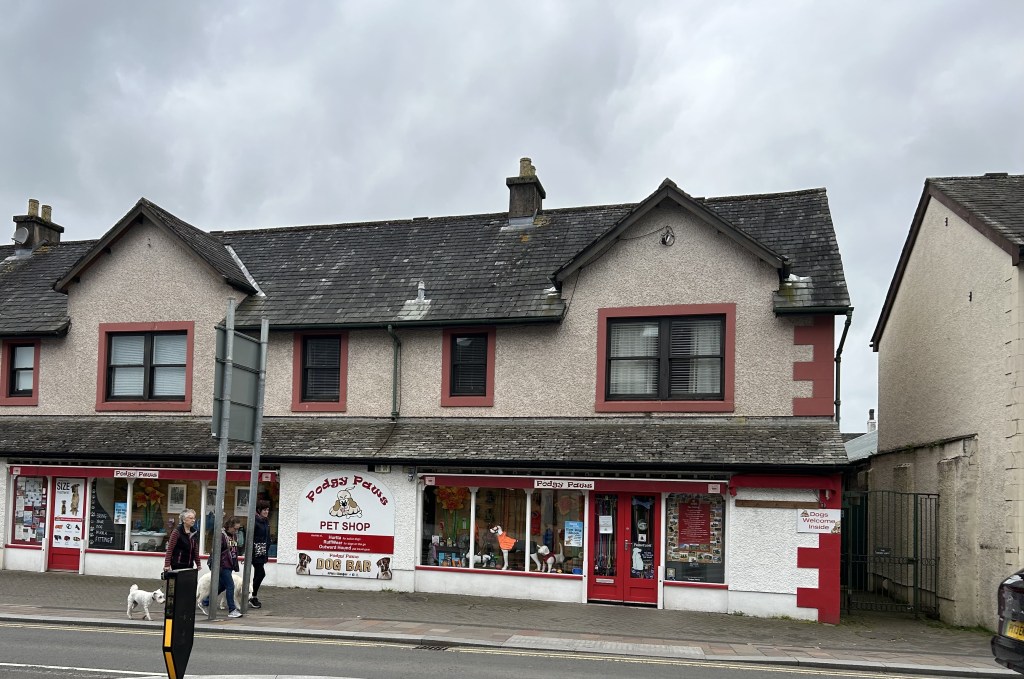
Turning left out of the bus station onto Tithebarn Street, it’s not long before we pass another reminder of changing times: a pet supermarket called “Podgy Paws”, just one manifestation of Keswick’s reputation as the dog capital of the UK.
For a while now the town has promoted itself as dog-friendly and its success in doing so is evidenced by the number of pubs, cafes, restaurants and B&Bs that warmly welcome dogs. In the dim and distant 60’s I don’t recall stumbling over malingering mutts, their trailing leads, or the many bowls left out on pavements for them.
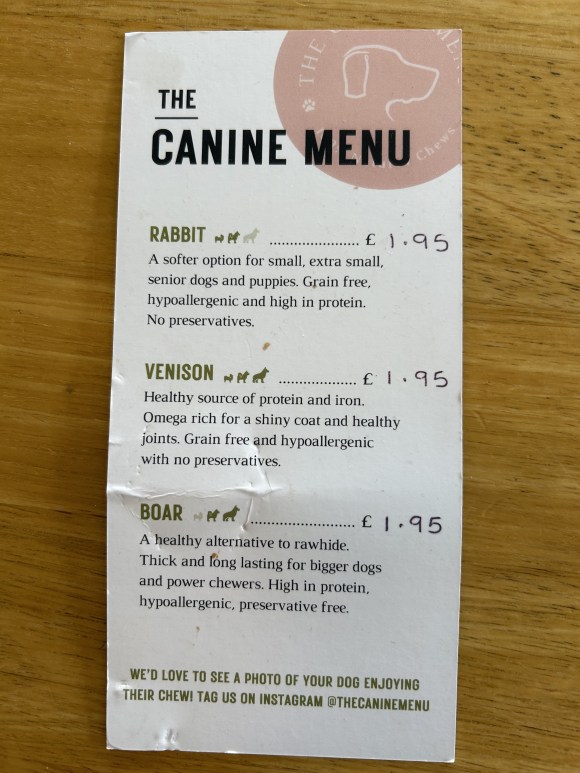
Catering for this carnival of canines, food outlets offer a wide range of treats: doggy ice creams are widely available, some cafes and pubs offer “Dogs Dinners” and most allow dogs into eating areas. Personally, there’s nothing I find less appealing than eating a meal within sight of a slavering dog – with steam rising from a coat soaked by the inevitable rain and emitting a pungent aroma as it is slowly “cured” by the fire.
Don’t get me wrong, I find some dogs quite endearing in their place and like nothing better than to meet a lively spaniel or collie out on the fells, but what I do find annoying is falling over the dog-tired beasts as I weave my way to the bar or stroll round the market. I have even less time for irresponsible and insensitive dog owners who, convinced that everyone loves their dogs, assure me that the snarling wild animal attempting to have sex with my leg is simply “being friendly” as I struggle to prise their beloved pet off my trousers.
I’m probably in a minority though, as most of Keswick now seems to celebrate dogs: a phenomenon that “Podgy Paws” and its sister shops are cashing in on big time by offering a mind-blowing array of products which, had they been around in the sixties, would have been met with derision. I’m thinking of such “essentials” as “Dog Goggles” to protect a precious pet’s eyes from sun and “debris” on the fells, a range of fleeces and rainwear to rival Rohan, back-pack carriers, socks, life jackets, a “cooling wrap” and bath robes.
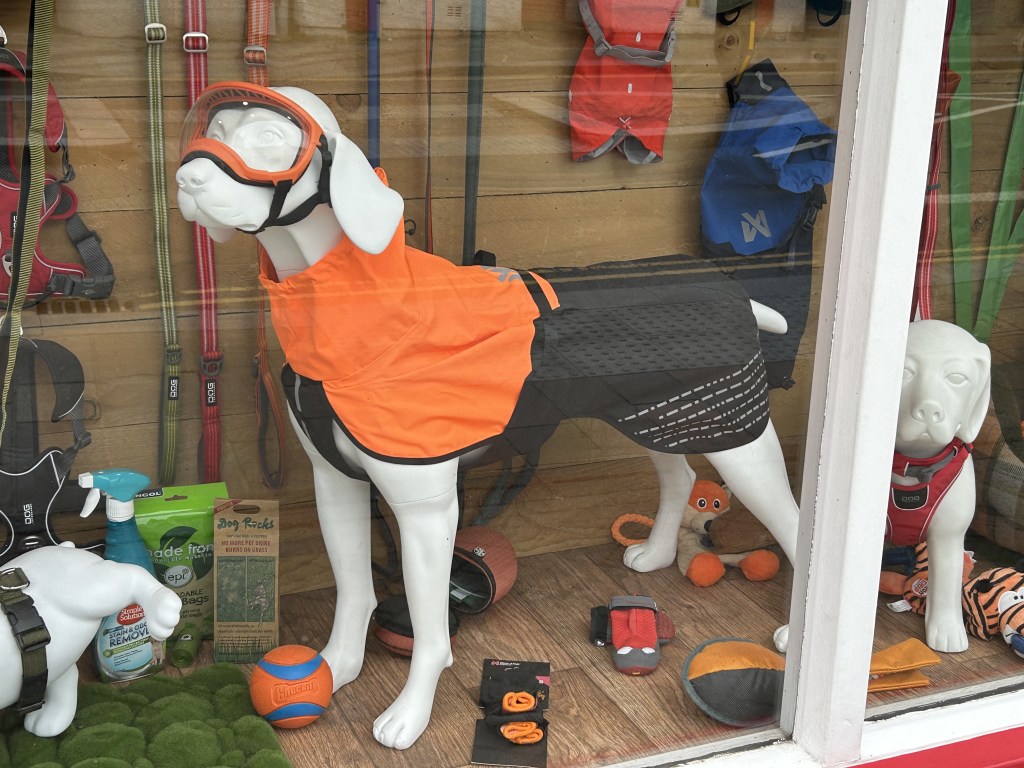
I don’t know if dogs have a sense of humour, but if they do I think some of them would be cocking their legs with mirth at the outlandish “apparel” many of their four-legged friends are forced to wear. The embarrassed unfortunates thus attired must turn as red as setters.
At the end of Tithebarn Street we turn right at the mini-roundabout on to the A5271 and on our right pass one of Keswick’s culinary wonders, the Kingfisher chip shop and café.
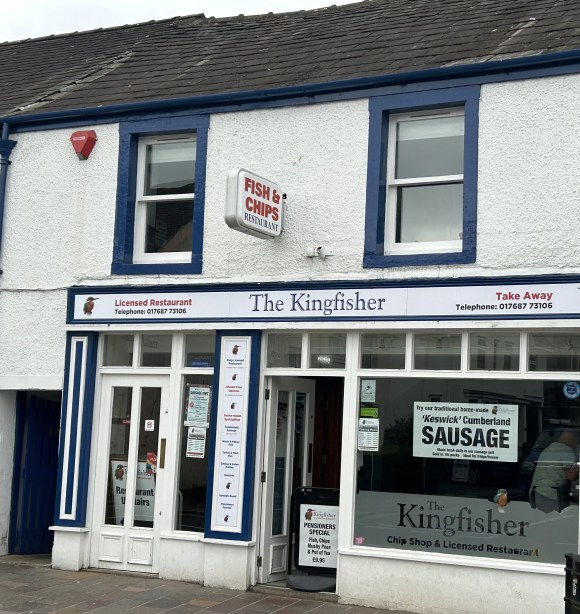
The Kingfisher is an old-fashioned chippy with an upstairs licensed “restaurant”. It is our favourite chip shop in Keswick (or anywhere else for that matter) and dishes up not only excellent fish and chips but also award-winning pies and home-made Cumberland sausages. A reservation is recommended here since it is very popular with discerning diners seeking wholesome food, friendly service and value-for-money in unpretentious surroundings.
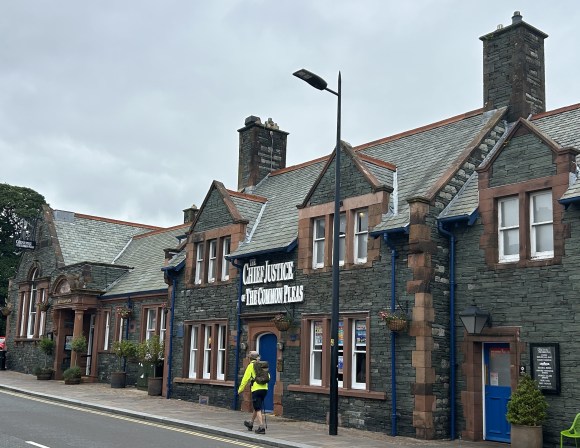
As the A5271 bears left at the traffic lights, our route continues ahead on the pedestrianised Main Street: however, before continuing, lovers of quirky old buildings, pints of cheap beer with their full-English breakfasts and a colourful cast of characters can briefly divert on the road to the left and visit the Chief Justice of The Common Pleas, Keswick’s very own Wetherspoon pub.
While not a great admirer of the owner or his politics, I do have a sneaking admiration for the way J D Wetherspoon establishments manage to offer decent beer at unbelievably low prices, often in interesting historical buildings invariably converted tastefully, without sacrificing original features.
This is the quirkiest pub I’ve ever visited, being set in an old magistrate’s court and police station built in 1902 and still recognisable as such. So, if you want to enjoy a wine in the witness box, a beer on the bench or a Bells in the cells, this is the place for you.
The pub’s name comes not from this relatively recent history but rather from the founder of a workhouse that was built in the 17th century on the site by Keswick boy made good, lawyer and judge, Sir John Bankes, who was appointed Chief Justice of The Common Pleas in 1640.
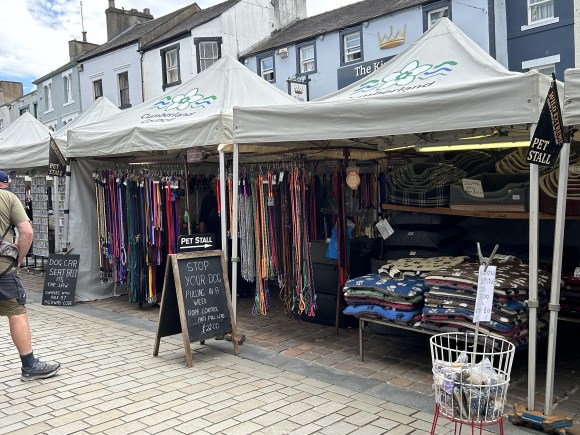
Proceeding along Main Street we reach Market Square, the centre of Keswick. A Royal Charter for a street market was granted in 1276 and one has traded here ever since. Today the market is held every Thursday and Saturday.
The market is very popular and features around 60 stalls offering a wide range of food, drink, clothing and of course, lots of doggy “essentials”. I’ve even seen a stall run by a Christian group selling religion, who seem to direct their “good news” at youngsters: they remind me of those happy-clappy evangelists who turn up on seaside beaches combining innocent music, fun and games with what seems to me the quite disturbing indoctrination of impressionable kids.
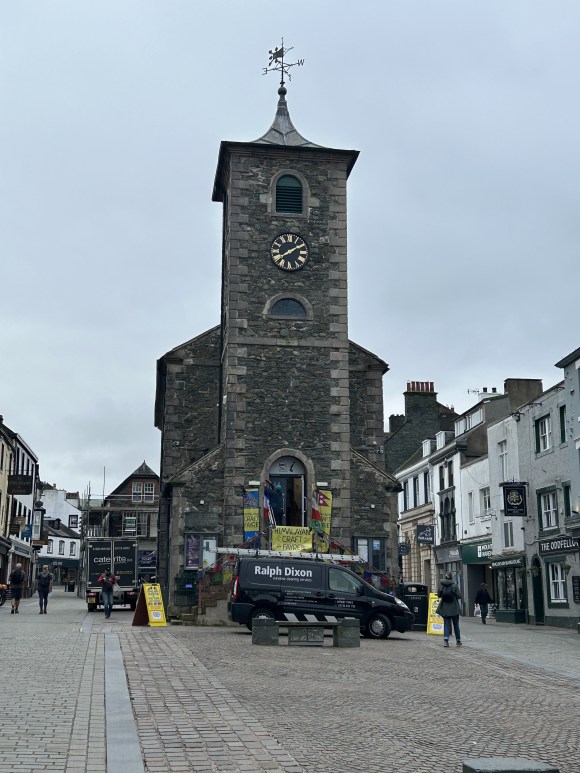
Main Street is also where we find the Moot Hall. This Grade II listed building, with its unusual one-armed clock, was built in 1813 on the site of a medieval court house. Since then, it functioned as Keswick Museum and council HQ before its current incarnation as the town’s Tourist Information Office.
The hall is the start and finish point of the unimaginably tough Bob Graham Round, an individual challenge that involves fell runners traversing 42 Lakeland Fells in 24 hours, covering 66 miles and climbing 26,900ft in the process. Bob Graham completed the first “round” in 1932 in 23 hrs 39mins: in the 60’s I was in awe of this superhuman achievement but am even more impressed by the current record, a remarkable 12hrs 23mins set in 2022 by Jack Kuenzle. The Hall is also the start point for other famous challenges such as the run around all 214 “Wainwright Fells”.
Past the Moot Hall we follow Lake Road, which runs to the right of another decent chippy, The Keswickian, just before passing one of the town’s most celebrated pubs, the Dog and Gun (or as the locals have it, the “Woof and Bang”). This is a proper pub, unpretentious, old fashioned pub.
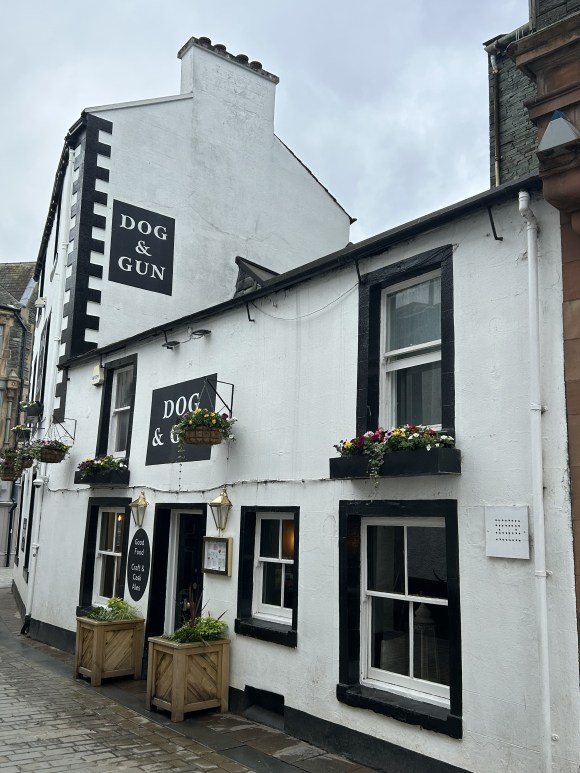
The Dog and Gun is, rightly, very popular so does get busy, but it’s worth surviving the crush at the bar to sample one of its wide range of local ales and maybe scoff some Hungarian Goulash, the speciality of the house (a veggie option is available).
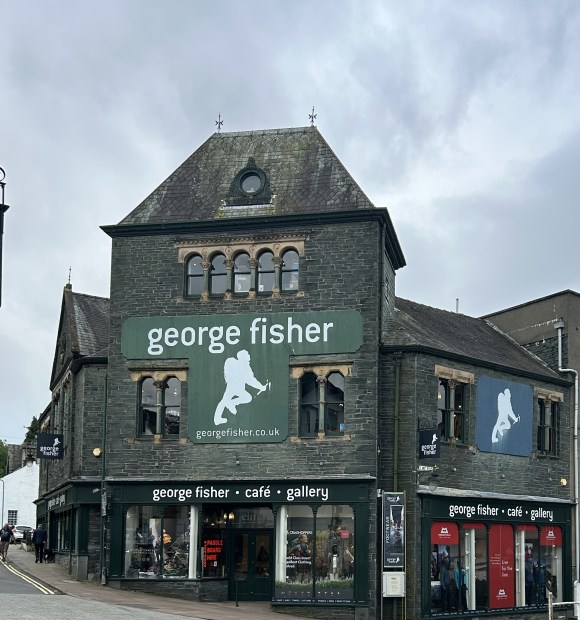
Further along Lake Road and just before it takes a sharp right turn in front of George Fisher’s famous outdoor shop, we come to The Wainwright pub on our left. Known as “The Four in Hand” before changing its name in 2015 in honour of the doyen of Lakeland fellwalking, this is another friendly, award-winning walkers’ pub that has retained its authenticity and serves up to eight real ales, mostly from Cumbrian breweries. There is also an interesting collection of Wainwright-themed exhibits on the walls and video screen.
As Lake Road makes its way down to Derwentwater we pass through a tunnel, where buskers are often found. One of the “regulars” is a superb blues guitar player who once generously offered to let me play the very nice guitar I was admiring. I chose not to embarrass myself, but as we fell into conversation I discovered that this jolly roving minstrel had a darker side. I asked if, given his obvious talent, he played in proper venues: he told me he had played in pubs, but got very irritated when people talked while he was playing, so irritated that he claimed to have “decked” more than one loquacious punter. So, now I know why he’s playing in the subway.
After throwing a few coins into the guitar case and (hopefully) avoiding a decking, we proceed through Hope Park, with its crazy golf, pitch and put course, stream and delightful landscaped gardens, to emerge onto the road near the Theatre by The Lake.
It’s hard to argue with the theatre’s claim to be “one of the most beautifully situated theatres in the world”. It has a terrific, hard-won reputation for quality theatre and musical performances by both the resident company, who perform 6 plays in repertory every summer and visiting productions. It is also a thriving arts centre and creative hub for the community, presenting an annual literary festival, music, comedy and films.
The theatre opened in 1999, so did not exist when I first visited: however, the portable “Century Theatre”, built on a series of old RAF trailers, had visited Keswick in 1961 and chose to settle in the car park full time from 1974 until 1997. The new theatre comprises a 400-seat main house plus a smaller studio theatre.
Across the road from the theatre, we go through a gate into Crow Park, another delightful open space with terrific views in all directions and finally reach the lake. Here you may see a few hardy souls taking a dip at any time of year.
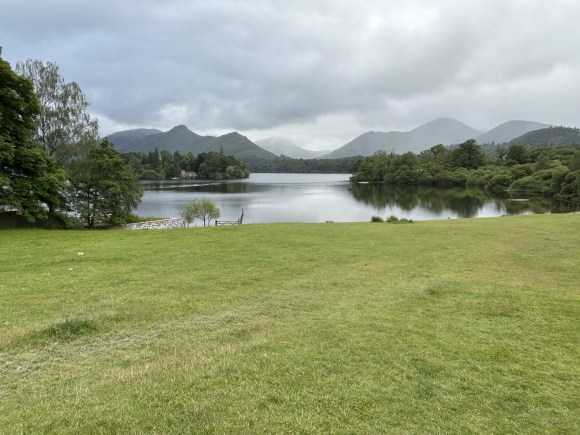
“Wild swimming” is now very popular in the UK, as more and more people are convinced of the physical and mental health benefits of plunging into natural bodies of water. With its rivers, waterfalls, mountain tarns and lakes, Cumbria offers a bewildering choice of locations and swimming is permitted at most of them, apart from Ennerdale, Haweswater and Thirlmere, which are all reservoirs.
Who is swimming in the wild and why on earth would they want to do it? A survey by “Outdoor Swimmer” magazine found that the most common motivation cited is mental health and general wellbeing benefits. A survey in the BMJ seems to confirm these benefits, suggesting that the effect of cold water on the skin may stimulate the production of endorphin, which improves mood. The fact that it’s a social activity also probably helps mood enhancement.
“Outdoor Swimmer” also found that growth in the activity was driven primarily by women. Certainly, my observation of large groups of swimmers congregating at the water’s edge wearing their super-dry robes and clutching vacuum flasks suggest that it is a predominantly female activity: I’ve been struck by how many of these participants seem to be “dunkers” rather than serious “swimmers” though.
The growth in what to some might appear to be an insane activity has been fuelled by both social media (where countless online groups promote it and share tips and locations) and a stimulus from the pandemic years, when many people discovered the joys of the outdoors, including a dunk in cold water.
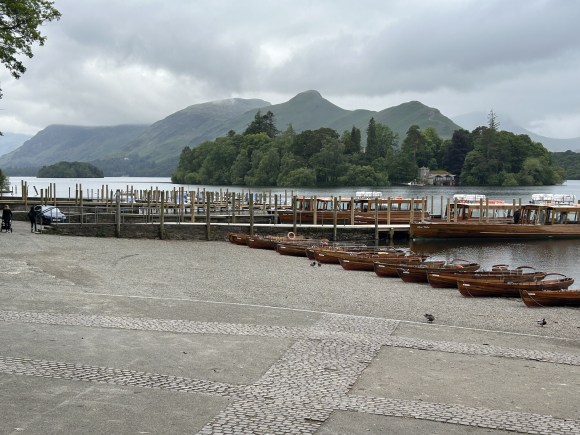
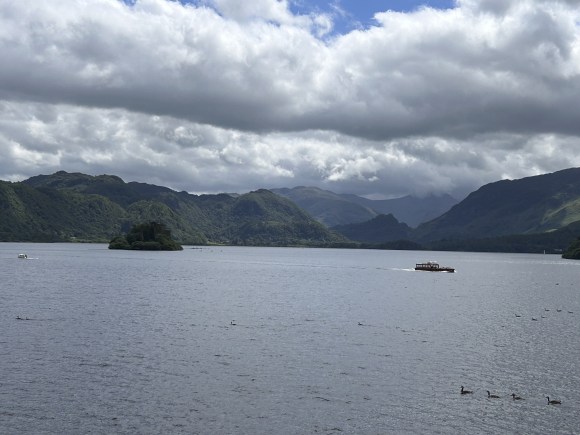
Leaving the park, we turn right and continue down the road to the piers from which boats ferry passengers round the lake: from here we get a fantastic view of Derwentwater and its surrounding fells. For an even better view though, you can continue along the lake for a short distance to Friars Crag (at 264224). This is not a towering rock face as the name might suggest, but rather a lowly promontory, but one affording a classic, much photographed view over the lake towards the “jaws of Borrowdale”.
Near this viewpoint is a monument commemorating John Ruskin’s first visit to Keswick, as a five-year-old, in 1824. Much later in his life the well-travelled poet observed that the view from the crag was one of the finest in Europe.
Returning the way we came, turn right off Lake Road just past the large car park next to the theatre (at 265230), onto a path that runs alongside the HQ of Keswick Mountain Rescue Team and walk gradually uphill. The path crosses the B 5289 and continues to Borrowdale Road where we turn left and then shortly right (at 267231) onto Church Lane. Unsurprisingly, this path takes us to the entrance to St John’s Church.
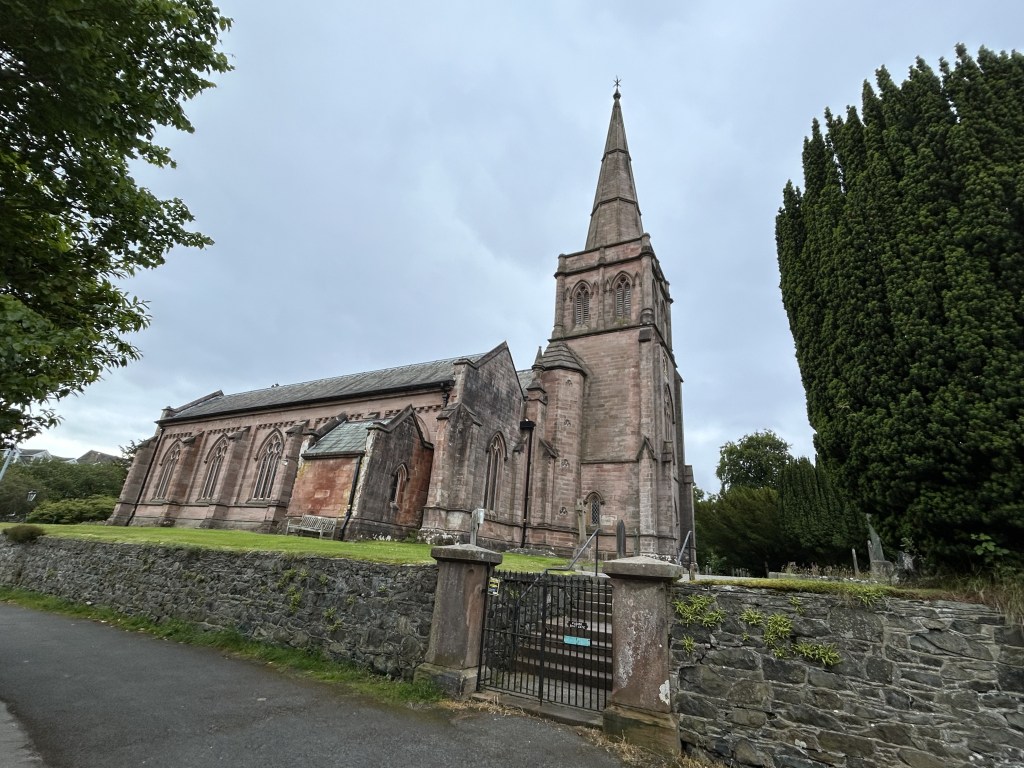
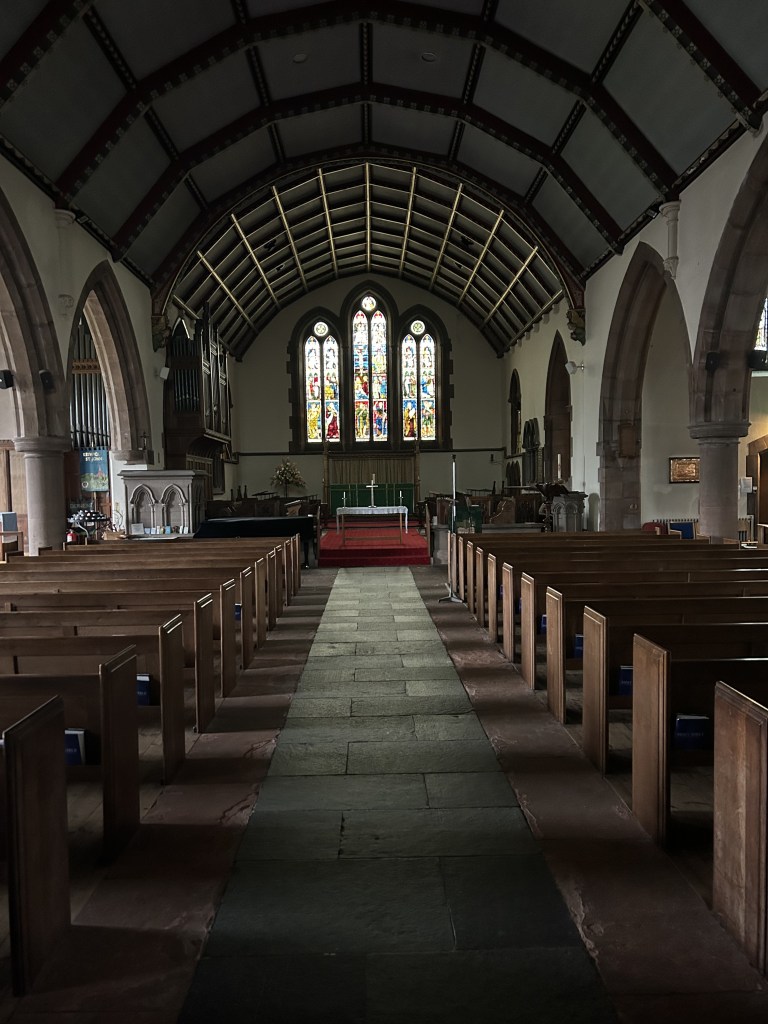
The church, with its atypical pink sandstone walls and a spire visible from many miles away on the surrounding fells, has occupied its prominent position since 1838. It is a thriving social hub for the town’s Anglican community, with a full programme of activities, including – not surprisingly given its excellent acoustics- musical events, along with a sad sign of the times – a food bank collection point. In the atmospheric graveyard we find the last resting place of Sir Hugh Walpole: the famous novelist having lived for many years down the valley at Grange in Borrowdale.
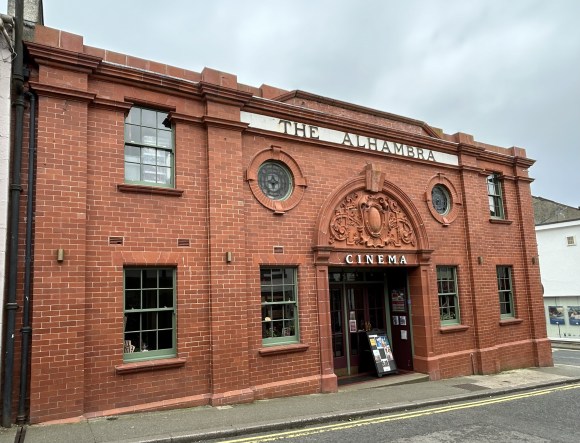
After visiting the church, carry on along Church Lane until it joins St John’s Street, where we turn left, passing the charming old Alhambra cinema.
This cinema is open every day of the year, apart from Christmas day and has operated continuously since it was built in 1913. It boasts a 157-seat main house and a cosy 28 seat “Screen 2”.
In its early days the cinema was not welcomed by all and Canon Rawnsley, one of the founders of the National Trust, tried to ameliorate the “abuses of the cinema”, which he believed included “incitements to dissipation, grossness, illicit passions, theft, robbery, arson and homicide by the presentation of moving pictures dealing with sensational, sometimes erotic and criminal incidents”. He might have been the co-founder of a revered national institution, but doesn’t sound like the sort of bloke you’d want to share a convivial pint with at the Dog and Gun.
Where St John’s Street continues as a pedestrianised zone we bear right, following a road that becomes Station Street. Where Station Street crosses the A 527, to become Station Road on the other side, we can take another detour, to the left, then turn into a side road to our right that leads us to the home of the Keswick Brewing Company, with its brewery and bar, “The Foxes Tap”.
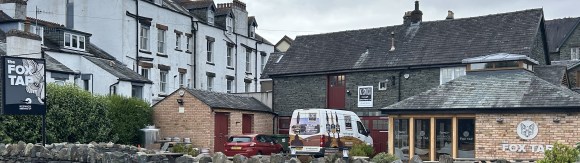
This short diversion is rewarded with fine ales, a friendly ambience and a pleasant seating area outside one of my favourite Keswick bars. While the present brewery has only been there since 2006, it stands on the site of the oldest brewery in Keswick. In 2019 the brewery was extended to include new brewing capacity and a pub and today runs a programme of “Brewery Social” events in the bar and tours around the brewery.
This is one of a growing number of excellent independent and micro-breweries that have sprung up in Cumbria. The Visit Cumbria website presents an impressive list of local Breweries – although please note that Jennings Cumberland Ale is no longer brewed in Cumbria, but rather by Carlsberg / Marston in the Midlands (as is the best-selling Wainwright Golden Ale).
Returning to Station Road, we cross the River Greta and proceed, with Lower Fitz Park to our left and Upper Fitz Park on our right, to arrive at the Keswick Museum and Art Gallery.
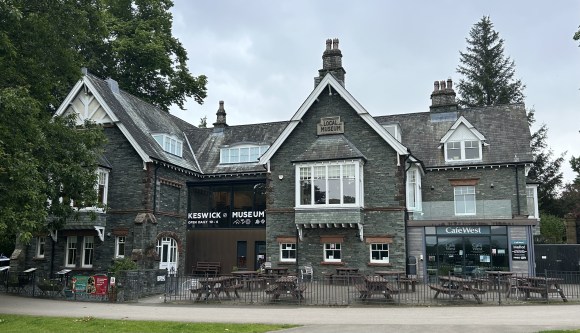
Opened to the public in 1898, this award-winning museum’s collection contains over 20,000 exhibits reflecting life in the Keswick area, with only 5 -10% of this vast collection on display at any one time. Exhibits cover social and industrial history, natural history, geology and the work of local artists and writers. There is usually a keynote exhibition each year on a specific theme, which in the past has included mountaineer Chris Bonnington, celebrated Lakeland guide book writer, Alfred Wainwright and film-maker Terry Abrahams. In 2024 they are focusing on the 250th anniversary of the birth of famous Keswick poet, Robert Southey, Poet Laureate and author of the “Three Bears” tale.
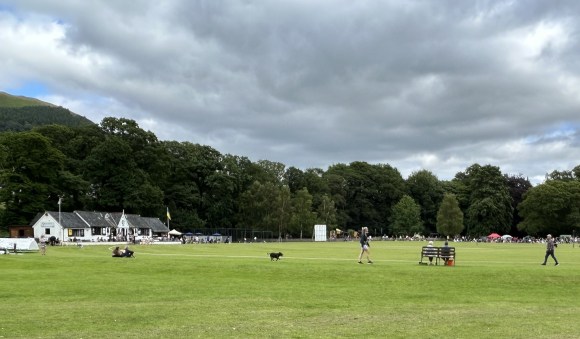
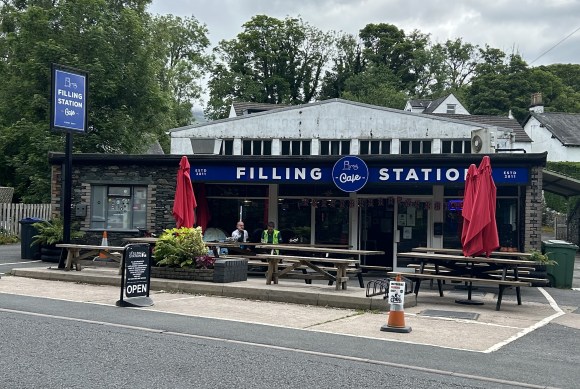
Walking around the idyllically situated cricket pitch and passing behind its traditional pavilion we take the path to the right just before Keswick Football Club’s ground, passing a BMX track before turning left alongside Brundholme Road and shortly hitting the ubiquitous A 5271 again to turn right along Crosthwaite Road, past the Filling Station Café and Pheasant Inn.
The Filling Station occupies the site of a former garage and describes itself as a “family friendly, retro-diner”: this licensed café is a very popular spot for motorcyclists, who congregate here in large numbers to enjoy a range of hearty, locally sourced food at reasonable prices.
Across the road from the café lies the Pheasant: a fine example of an unspoilt Lakeland inn with a traditional bar with a log fire and two atmospheric dining rooms. This is a place where I’ve enjoyed many a pint over the year on account of it being our “local” in Keswick. If you just want a pint now though, you’d be well advised to avoid the periods they serve food as it gets very busy then on account of the excellent nosh on offer.
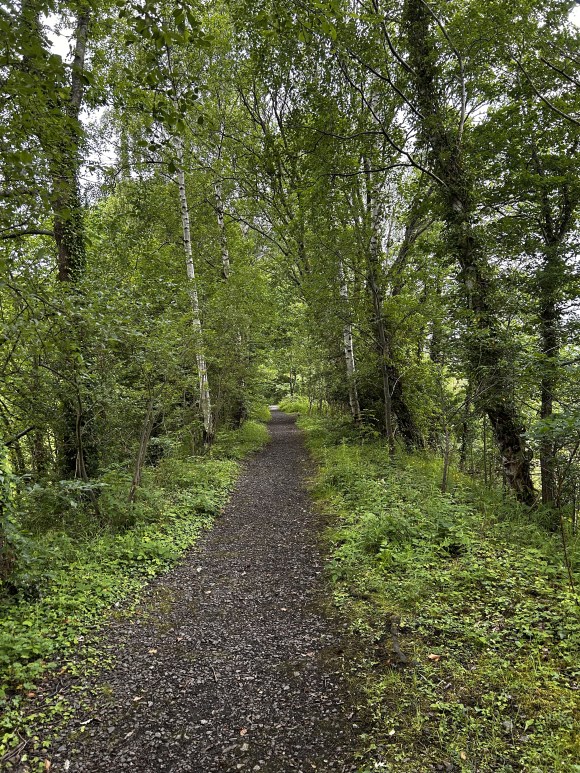
Just before the big roundabout, where the A 5271 crosses the A66, we take a left turn along a path (at 264243) which follows the track of the old railway line linking Penrith to Cockermouth. We follow this lovely green lane to a path on the left (at 257244) that leads us into St Kentigern church yard.
After being driven out of Glasgow, St Kentigern (St Mungo in Scotland), set up his cross in a clearing (or thwaite) hereabouts in 553AD – hence the name Crosthwaite for this part of Keswick. A church was built in 1181 by Alice de Romili, who also founded Bolton Abbey in the Yorkshire Dales: however, only small portions of the original church remain under the floor of the one you see today, which was essentially completed in 1523. In 1844 it was extensively renovated as a monument to the Poet Laureate Robert Southey, who’s grave can be found in the churchyard: there is an effigy of him in the church with an inscription from William Wordsworth;
Ye vales and hills, whose beauty hither drew
The poets steps, and fixed him here, on you
His eyes have closed.
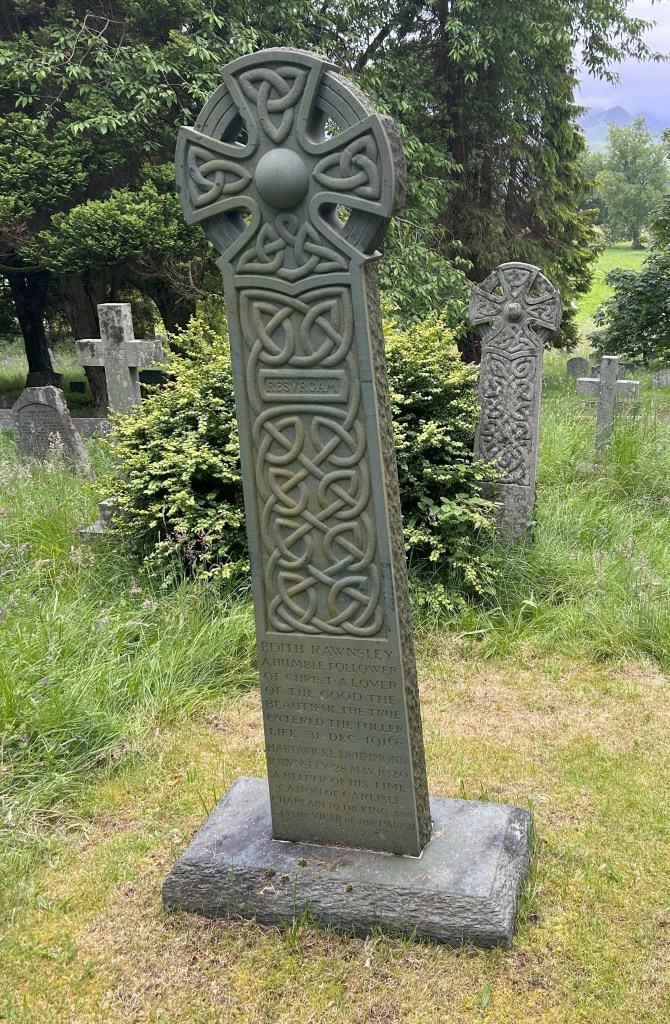
Other notable attractions of the church are some fine examples of old stained glass dating from the 12th century, a mosaic floor, a large organ, a sundial and a baptistry, dedicated to Canon Hardwicke Rawnsley who was vicar here for 34 years from 1883,. As already noted, Canon Rawnsley’s major achievement was being a founder of the National Trust, as well as a miserable old curmudgeon who fought against the iniquitous impact of the cinema on the nation’s morals. The canon is buried in the church yard.
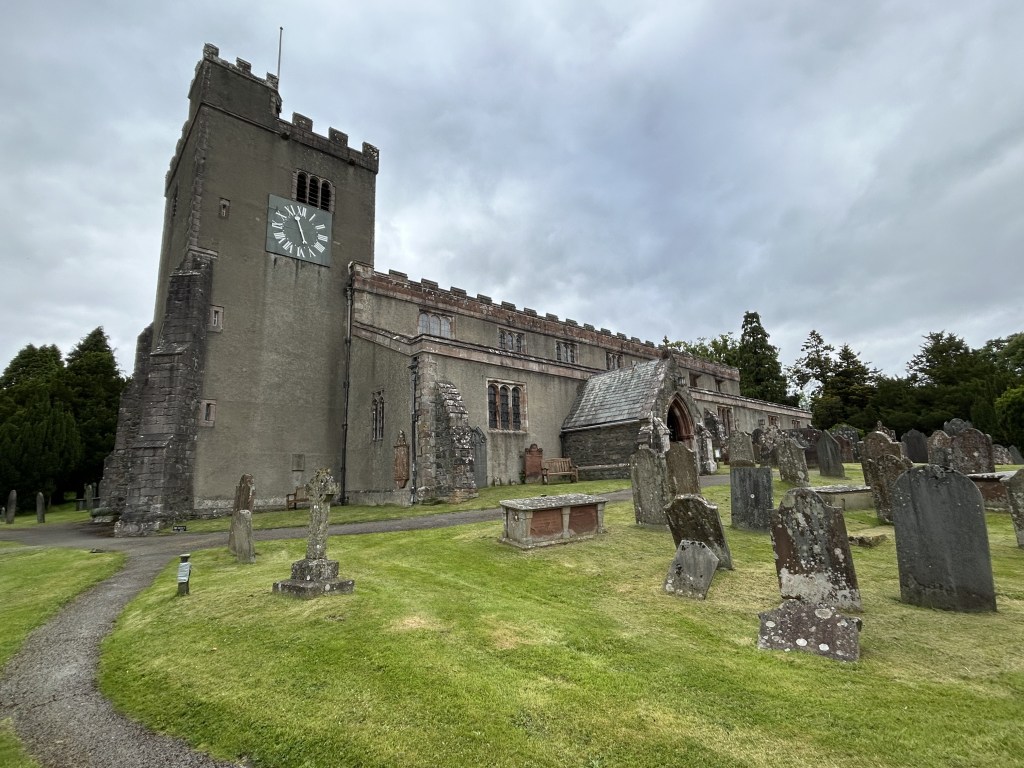
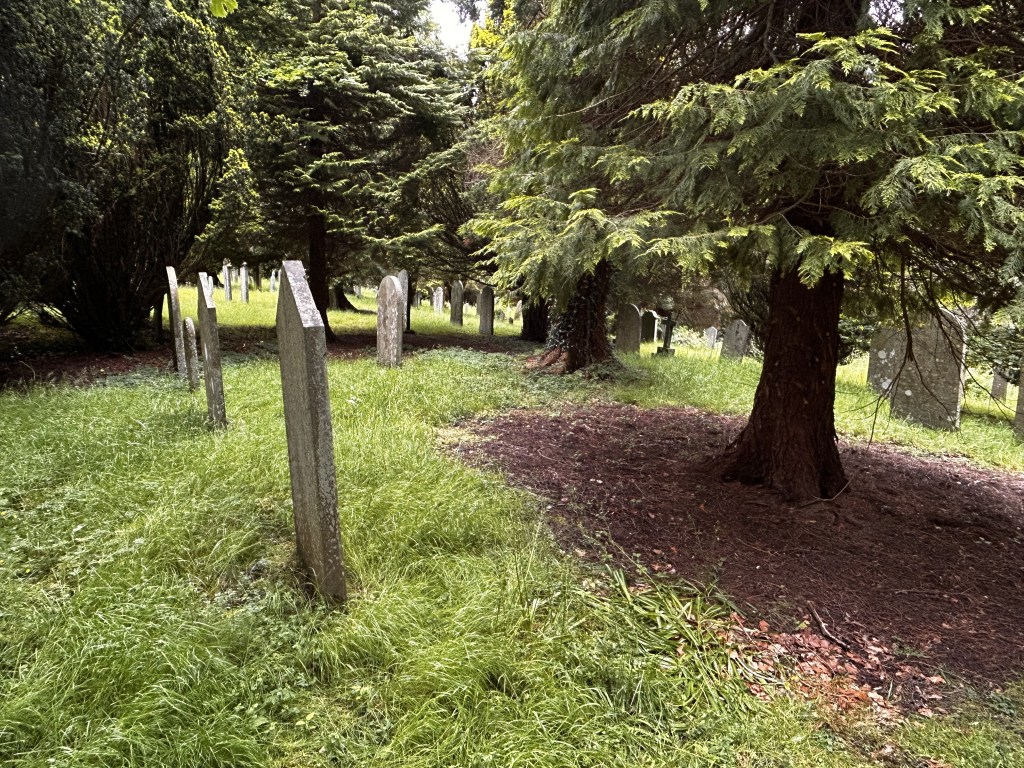
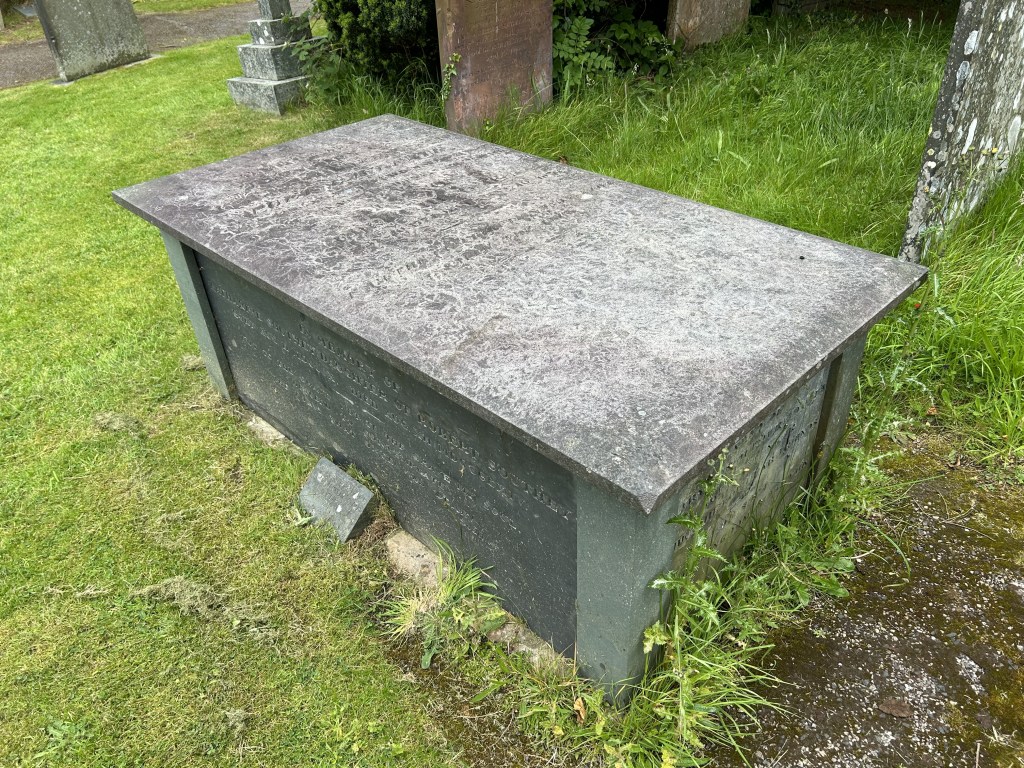
At the other side of the churchyard, with Keswick School to our left, we turn right (at 258243) on a road that quickly becomes a footpath taking us to the B5289, where we turn right and cross over to follow a road to our left on the other side. Here you will almost certainly see another symbol of 21st century Keswick – a host of camper vans parked by the roadside.
There has been massive growth in the number of camper vans, or what in the 60’s we called dormobiles, on British highways. The pandemic and associated factors such as the trend towards staycations, flexibility to work remotely, the preference for socially distanced travel options and a new awareness of the benefits of the great outdoors have all been catalysts in the boom in van sales. At the same time, the profile of people buying vans has also changed, away from the stereotype of the older male to a much younger demographic.
Some of these later-day nomads use traditional camp-sites, but many choose to park on public roads – sometimes legally, but often not. YouTube is full of videos depicting “van life” and providing tips on where van-lifers can park free of charge, or “stealth camp”, defined on one site as “the act of camping in unpopular, unknown and out of the way private or public locations and leaving the following morning before anyone notices”.
I understand the attraction of “van life” and why the freedom, flexibility and cheapness of it strikes a romantic chord in many people, but the stealth camping variant can also cause disruption and inconvenience to property owners and local residents as well as health risks and safety issues for the van-lifer – to say nothing of the risk of a criminal record. To be fair, some of the web-sites I’ve consulted point out the need to comply with the law, but other “influencers” in this area take a more cavalier view and actively encourage law breaking. Some chancers devotees are also anything but “stealthy” in their approach and far from adopting a low-key presence blatantly advertise it by setting up camp outside their vans, complete with barbeques, tables and chairs. This is really taking the piss, but given the lack of toilet facilities, it’s best not to ask where they are depositing it.
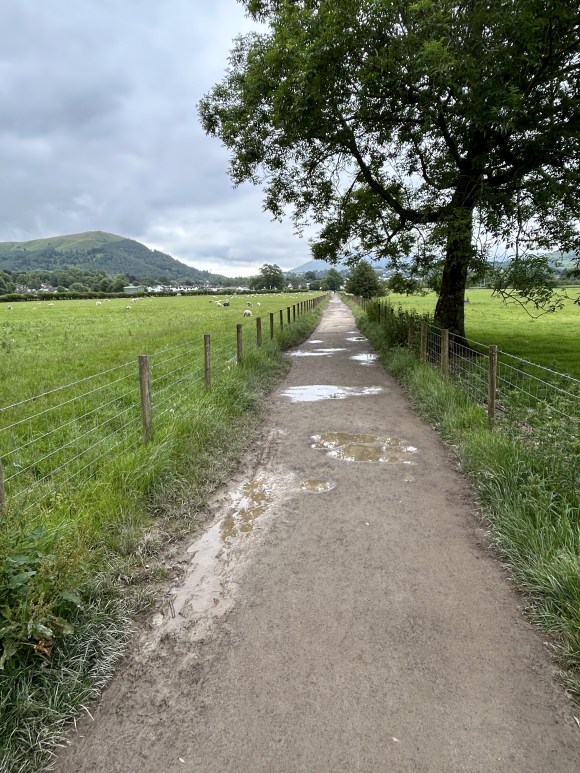
After passing the stealthy travellers, we take a footpath to the left at OS 255239, part of the “Cumbria Way” long distance path, which takes us back across the fields to Keswick.
We eventually reach the road, where we turn right over the River Greta. After crossing the river, a turn to the left (at 263237) brings us to the old pencil factory and museum.
Pencils have been made in Keswick since 1832. Initially by Bank, Son and Co and then after 1916 by the Cumberland Pencil Company, who manufactured their famous Derwent pencils in the huge factory you see before you. The company moved production to Workington in 2007 after which the factory was adopted for other purposes, as we will see below.
There is still a small museum devoted to the history of pencil making since graphite was first discovered at Seathwaite mine, in the 1550’s. Described as “a journey of pencil and graphite discovery”, the museum has the biggest colouring pencil in the world and other fascinating exhibits such as the pencils made for RAF aircrew during WW2, with secret compartments for a compass and map of Germany. The museum has 80,000 visitors a year, so, don’t be too sniffy, give it a go: it’s a really fun hour or two.
Next to the museum looms the huge edifice of the old pencil factory. The former home of Cumberland Pencils is now home to Keswick Ministries and their annual “Keswick Convention”.

The first convention was held in 1875 and was a small-scale affair on the lawns of St Johns Church. Since then, the convention has grown and today attracts 12,000 Christians from the UK and around the world for 3 weeks every summer. According to its website it “provides Bible teaching for all ages, vibrant worship, a sense of unity across generations and denominations and an inspirational call to serve Christ in the world”.
The towns official visitors website (Keswick.org) promises that the convention “offers something for everyone” – presumably “everyone” except the 53.8% of citizens in England and Wales who at the 2021 census did not identify as Christian?
After marvelling at the world’s largest pencil and the blind faith of the thousands who attend the convention, return to the main road and turn left to follow the road to a mini roundabout, where we turn right to return to the bus station. One final change you might witness here is a long conga line of ageing hikers snaking around the bus station, clutching bus passes providing free transport down Borrowdale and over the Honister Pass to Buttermere.
Bus passes not only save pensioners money and reduce the stress and environmental damage caused by driving, but – as we’ve discovered – are also very useful in facilitating linear walks.
I hope this tour of Keswick convinces you that, despite many changes over the last 60 years or so, it’s still a great place to visit. A time traveller from the past would no doubt be pleasantly surprised to find a first-class theatre, enjoy swimming in wild places and sup a cut-price pint in the cells at ‘Spoons.
But, he or she might be less impressed at having to hurdle dogs on Main Street, wade through the detritus left by irresponsible van-lifers and being told that the bar of an old Lakeland inn is now a no-go area for drinkers. Our visitor would also doubtless be shocked and saddened by the fact that, in 2024, in one of the richest countries on earth, food bank usage is on the rise.
Not all of the changes have been for the best and Keswick is certainly not a good place to be if you have enochlophobic tendencies (look it up, I had to). However, ultimately the things that make Keswick so special and have captivated generations of tourists remain the same: the lakes, the mountains and the company of like-minded souls haven’t changed and hopefully they never will.
Discover more from Over the hill - on Dartmoor & in Lakeland. I
Subscribe to get the latest posts sent to your email.
 Over the hill - on Dartmoor & in Lakeland. I
4 replies on “ALL CHANGE AT KESWICK”
Do read and find out where to eat and drink and what to visit. Although familiar with Keswick it seems I’ve missed much.
LikeLike
Thanks Roger,
LikeLike
Really enjoyed that Steve 😀 but sorry to read that The Pheasant has become a no-go area for early doors drinkers like us. I guess it’s a natural progression from Jennings being bought by Marstons/Carlsberg and all that entails.
My first visit to Keswick was via steam train from Penrith and I remember the bus took us from the station, through the Market Square before depositing us at the end of the lane to Glaramara, at that time a B+B, in Borrowdale.
Yes, the pencil museum is definitely worth a visit. My favourite exhibit: The Pencil At War. Which my childhood imagination saw lines of 2HBs taking on a set of colouring pencils 😁
Back in 2001 when we bought our cabin on Burnside, dogs were not allowed the Woof and Bang. How times have changed. And so did the prices after Greene King bought it. I nearly fell off my perch a few years ago when I was charged over £4 for a pint of LG. I haven’t been back since. My preferred pub is now the Wainwright. As you say, a great choice of beers and the food is good quality and reasonably priced.
I really must get back down there soon.
All the best to you both.
LikeLiked by 1 person
Lovely memories of your early visits, Ian. Me and Pat enjoyed doing the quiz at the pencil museum and were delighted to win a pencil! (We did have kids with us).
LikeLiked by 1 person